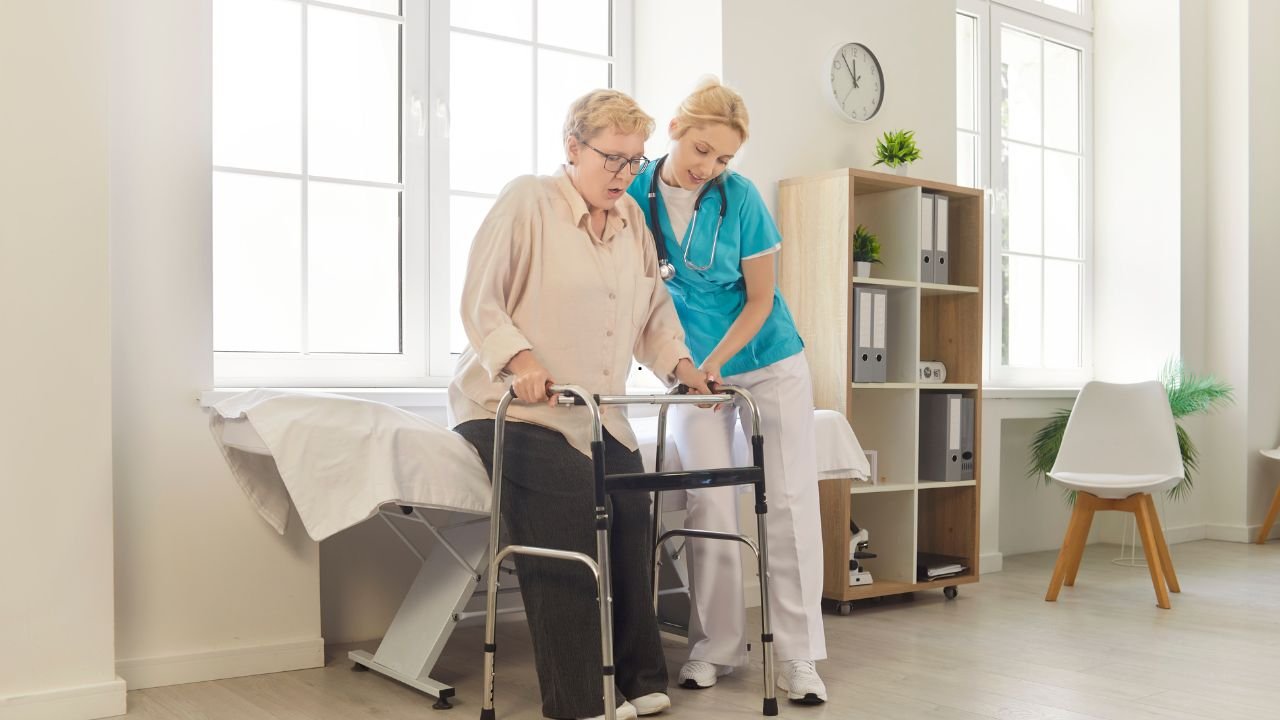
When a patient leaves the hospital and enters the home environment, the clinical responsibility does not end — it changes hands. And the equipment waiting for them at home may be doing more harm than the condition they were discharged to manage.
The home as a high-risk environment
Table of Contents
The migration of care from hospital settings to the home has been one of the defining structural shifts in European healthcare over the past two decades. Driven by an ageing population, rising inpatient costs, and a genuine body of evidence that recovery outcomes improve when patients are in familiar surroundings, outpatient and home-care models have expanded rapidly. In Germany alone, more than four million people currently receive some form of formal home care, a figure projected to increase substantially as the baby boom cohort moves into its eighth decade.
This transition is largely beneficial. But it carries a clinical risk that is insufficiently discussed in the literature and almost entirely absent from public health communication: the home environment, unlike the ward, is not engineered for the physiological vulnerabilities of its occupant. The bathroom in particular — a room designed around the assumption of a standing, able-bodied adult with intact balance and lower-limb strength — becomes a site of significant secondary injury risk for patients with mobility impairments, post-surgical limitations, neurological conditions, or the generalised deconditioning that accompanies age.
The statistics are well established but bear repeating. The majority of falls in community-dwelling older adults occur in the bathroom, most frequently during transitions — the act of standing from a toilet, stepping over a bath edge, or shifting weight on a wet shower surface. Hip fractures resulting from such falls carry a one-year mortality rate in older patients of between 20 and 30 percent. Many of the survivors do not return to their pre-fall functional level. The fall itself, in a meaningful proportion of cases, represents the inflection point at which independent living ends.
What is less commonly framed, but clinically accurate, is that a proportion of these injuries qualify as iatrogenic — caused not by the underlying condition alone, but by the care environment or the interventions meant to support the patient within it. When a patient’s care plan includes a recommendation to use grab rails or a shower seat, and the equipment installed to fulfil that recommendation fails under load or positions the patient incorrectly, the resulting injury is not simply bad luck. It is a preventable harm traceable to a decision in the care chain.
The danger of DIY and non-medical household-grade solutions
The market for bathroom safety aids has expanded in step with the home-care population, and not all of it has expanded in the right direction. A substantial portion of what is purchased and installed as “bathroom safety equipment” originates from hardware stores, general home goods retailers, and unverified online vendors — products designed, tested, and marketed for aesthetic purposes or light domestic use, not for the specific biomechanical demands of a person with impaired mobility transferring their full body weight under conditions of physical stress.
Material fatigue and load tolerance
A standard decorative grab bar sold through a general home goods channel is typically wall-anchored with two fixings into plasterboard or tile substrate, rated for static loads in the range of 10 to 20 kilograms. The dynamic load exerted by a person with limited lower-body strength using a rail to arrest a slip or pull themselves to standing can exceed 100 kilograms of lateral or shear force applied instantaneously. The physics of that transaction — between a rated static load and a real-world dynamic event — do not resolve in favour of the patient. Bars shear from walls. Fixings pull through substrate. The person who installed the bar in good faith, and the patient who reached for it in good faith, both had every reason to expect it to hold.
Material fatigue compounds this over time. Non-medical chrome or plastic fittings exposed to repeated humidity cycling, cleaning chemicals, and minor mechanical stress accumulate micro-fractures and substrate degradation that are invisible to visual inspection. A bar that held safely for six months may not hold on the day it is actually needed.
Ergonomic mismatch and incorrect placement
Even a structurally adequate bar, placed at the wrong height or angle, can actively worsen fall risk. The biomechanics of a safe toilet transfer, for instance, require a specific relationship between the support point, the centre of mass, and the direction of the rising force. A rail positioned too high encourages the patient to pull rather than push, loading the shoulder joint in a way that can precipitate a secondary loss of balance. A rail at the wrong angle relative to the toilet axis redirects momentum incorrectly. These are not abstract ergonomic concerns — they are documented in falls assessment literature as causal factors in bathroom incidents involving equipment that was present and ostensibly functional.
Non-certified shower chairs present a related problem. Without defined load-testing standards, seat heights vary between manufacturers without clinical basis. Seat heights that place the hip joint below 90 degrees of flexion — common in low-cost imported models — are contraindicated for patients with hip replacements and significantly increase the muscular demand of rising for patients with knee or hip osteoarthritis. A chair that is nominally present and functioning can systematically worsen the very condition it was provided to manage.
The false sense of security
Perhaps the most clinically consequential effect of inadequate equipment is the one that is hardest to measure: the behavioural change it induces. A patient who has been told that safety equipment has been installed, and who perceives that equipment as reliable, will take actions they would not otherwise take. They will shower alone when they would otherwise have waited for assistance. They will attempt transfers at night without alerting a carer. The presence of a rail — even an inadequate one — functions as a permission structure for independence that the equipment itself cannot support. When it fails, it fails at exactly the moment the patient has extended furthest beyond their unassisted capacity.
The significance of MDR compliance
The European Medical Device Regulation classifies bathroom aids — grab rails, raised toilet seats, shower chairs, bath lifts — as medical devices when they are intended for use by persons with disabilities or medical conditions. This classification is not administrative formality. It triggers a specific set of technical and clinical requirements that fundamentally distinguish certified products from their hardware-store equivalents.
MDR-compliant products must pass defined load-bearing tests conducted under conditions that replicate real-world use, including dynamic loading, fatigue cycling over the expected product lifespan, and resistance to the chemical environments typical of bathroom cleaning. Biocompatibility requirements govern surface materials, ensuring that grip surfaces remain functional when wet, do not degrade in ways that compromise structural integrity, and do not introduce chemical exposure risks for patients with skin sensitivities. CE marking under the current MDR framework is not a self-declaration — it requires documented conformity assessment, in many cases involving a notified body, and carries manufacturer liability for the clinical claims made about the product.
For raised toilet seats specifically, the precision of engineering required to meet MDR standards reflects genuine physiological complexity. A certified raised seat is not simply a platform that adds height. It is designed to achieve a defined hip-angle range during the sitting and rising phases of a transfer, with surface geometry that stabilises the pelvis and reduces the lateral instability that precipitates sideways falls. The armrests, where present, are positioned and load-rated to support the specific joint angles and force vectors of a rising movement — not approximated, but calculated against reference biomechanical data for the target population.
The liability dimension of MDR compliance is also practically significant for healthcare providers and care organisations. When a patient is injured using equipment specified or supplied as part of a care plan, the question of whether that equipment met applicable regulatory standards is directly relevant to the assessment of negligence. Sourcing non-certified equipment for a clinical purpose does not merely risk patient harm — it creates an institutional liability exposure that certified procurement would have foreclosed.
Fall prevention as a multidisciplinary approach
The clinical literature on fall prevention in older adults is consistent on one point: no single intervention reliably reduces fall incidence in isolation. Exercise programmes, medication review, vision correction, environmental modification, and assistive equipment all contribute, and their effects are additive. Equipment-based interventions work best when they are integrated into a broader assessment and care plan — but within that integrated approach, the quality of the equipment itself determines the ceiling of what the intervention can achieve.
The biomechanics of a fall in an older adult follow a well-characterised sequence. A perturbation — a slip, a stumble, an unexpected shift of centre of mass — initiates a corrective response. The corrective response involves rapid weight transfer, grip, and postural adjustment that depend on proprioception, reaction time, grip strength, and the structural reliability of whatever surface or support the person reaches for. Certified grab rails and shower chairs are engineered to participate correctly in that corrective sequence: positioned where the hand reaches naturally, rated to accept the force applied, textured to maintain grip under wet conditions. They are not passive objects. They are functional participants in the fall-prevention response.
The economic argument for high-quality certified equipment is compellingly direct. A hip fracture in a patient over 70 generates average inpatient costs in Germany of between 15,000 and 25,000 euros, excluding rehabilitation, long-term care escalation, and the downstream costs of reduced functional independence. A certified bath lift or a properly specified set of grab rails for the same patient represents a cost two orders of magnitude lower. The investment case for prevention over reaction requires no complex modelling. It is arithmetic.
Certified fold-down shower seats illustrate this logic particularly well. For a patient whose fall risk is highest during the sustained standing phase of showering — a common profile in post-stroke rehabilitation, Parkinson’s disease management, and post-operative recovery — a fold-down seat that deploys and stows against the wall addresses the specific risk window without permanently restricting the bathroom’s usability for other household members. The clinical specificity of that solution, and its MDR-certified structural reliability, is what distinguishes it from a plastic stool purchased from a general retailer.
Professional sourcing: bridging the gap between B2B and B2C
The procurement decision for home-care bathroom equipment sits at an unusual intersection of clinical and consumer contexts. On the B2B side, discharge planners, community nurses, occupational therapists, and care organisations need to specify equipment against defined clinical criteria, maintain documentation of regulatory compliance, and ensure supply chain reliability for ongoing patient cohorts. On the B2C side, family members — often with no clinical background, under time pressure, and navigating a genuinely confusing marketplace — need to make decisions whose consequences are serious without having the professional framework to evaluate options systematically.
Both populations are poorly served by general retail channels. The B2B buyer needs product documentation, conformity declarations, and technical specifications that a hardware store or general online marketplace does not provide. The B2C buyer needs access to expertise — someone who can translate a discharge letter’s equipment recommendation into a specific product, explain the differences between models, and confirm that what is being purchased is actually appropriate for the patient’s diagnosis and living environment.
Specialised medical distributors occupy this gap not as a commercial convenience but as a clinical necessity. Their role in maintaining the supply chain integrity of certified devices — ensuring that what is shipped is what was CE-marked, that substitutions do not introduce non-compliant variants, that documentation travels with the product — is a form of quality assurance that the general retail infrastructure is structurally unable to replicate. For healthcare providers specifying equipment under a duty of care, and for families making decisions under conditions of anxiety and time pressure, the availability of a verified specialist source is not a luxury. It is the condition under which informed, safe equipment decisions can actually be made.
Elevating the standard of home care
Fall prevention in the home-care context is not a quality-of-life afterthought. It is a clinical intervention with measurable outcomes, clear mechanisms of action, and a well-documented cost-effectiveness profile. Framing it otherwise — as a comfort measure, a convenience, or a family’s personal preference — misrepresents its medical significance and systematically deprioritises it in care planning discussions where it deserves full clinical standing.
The equipment dimension of that intervention is not the whole picture, but it is non-negotiable. An exercise programme cannot compensate for a grab rail that shears from the wall. A medication review cannot address the risk introduced by a shower chair whose seat height places a hip-replacement patient outside safe range. The human factors in fall prevention depend on a physical environment that has been prepared to support them, and that preparation requires equipment that meets the standards the clinical context demands.
Certified equipment is not an insurance policy purchased in anticipation of failure. It is the baseline standard below which a home-care environment cannot responsibly be said to be safe.
To ensure the highest safety standards in home-care environments, it is essential to source equipment from verified medical specialists. For a comprehensive range of MDR-compliant solutions, Medisanshop provides certified bathroom and toilet aids that meet the rigorous requirements of modern geriatric care — with the technical documentation, expert consultation, and supply chain integrity that clinical sourcing demands.